AI-Driven Cyberattacks Are Rising Fast and Harder to Detect
Artificial intelligence is no longer just a productivity tool for businesses. It has become a powerful weapon for cybercriminals, and small to mid-sized businesses are feeling the impact first. AI-driven cyberattacks are increasing in both volume and sophistication, making traditional security approaches less effective and, in many cases, completely outdated.
Cybercriminals are using machine learning algorithms to automate attacks, identify vulnerabilities faster, and personalize phishing campaigns with alarming accuracy. These attacks are no longer generic emails filled with spelling errors. AI can analyze social media profiles, company websites, and communication patterns to create highly convincing messages that appear legitimate. This evolution in phishing tactics significantly increases the chances of employees clicking malicious links or sharing sensitive information.
One of the biggest concerns for businesses is the speed at which these attacks operate. AI allows hackers to scan networks, test entry points, and execute attacks in a fraction of the time it would take a human. This reduces the window for detection and response, leaving businesses exposed for longer periods without even realizing it. In many cases, breaches go unnoticed for months, giving attackers continuous access to data, systems, and financial resources.
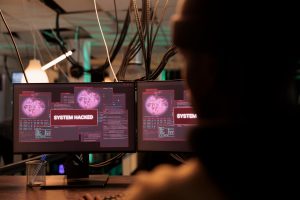
Detection is becoming more difficult because AI-driven attacks can mimic normal user behavior. Instead of triggering obvious red flags, these threats blend into everyday network activity. This makes it harder for traditional antivirus and rule-based security systems to identify anomalies. Businesses that rely solely on basic protection are increasingly vulnerable.
For managed service providers, this shift presents both a challenge and an opportunity. Clients are no longer just looking for reactive IT support. They need proactive cybersecurity strategies that include advanced threat detection, behavioral monitoring, and real-time response. Solutions powered by AI are now essential, not optional, for staying ahead of modern threats.
Small businesses often assume they are not targets, but the opposite is true. Cybercriminals see them as easier entry points due to limited security resources. As AI-driven attacks continue to evolve, businesses must adopt a layered security approach that includes endpoint protection, employee training, network monitoring, and regular vulnerability assessments.
The conversation around cybersecurity needs to change. It is no longer about preventing obvious threats. It is about identifying subtle, intelligent attacks before they cause damage. Businesses that fail to adapt to this new reality risk not only financial loss but also reputational damage and operational disruption.
AI is changing the rules of cybersecurity. The question is not whether your business will be targeted, but whether your current defenses are capable of keeping up.